
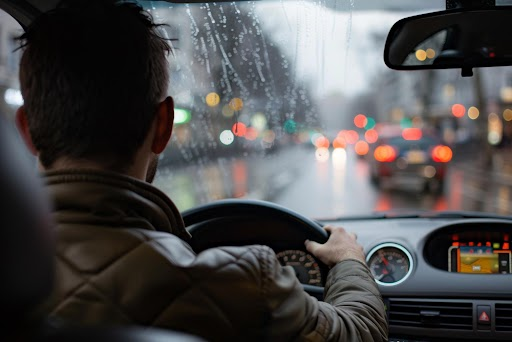
Most experienced drivers remember their first time driving in heavy rain.
Not because it was enjoyable.
Because it was uncomfortable.
The road looked different. Visibility disappeared without warning. Cars seemed to emerge out of nowhere through sheets of water. Every brake pedal press felt more important than usual.
For new drivers, rain changes everything.
The same route you've driven ten times can feel unfamiliar once visibility drops and water begins collecting on the road. That's why understanding how to drive safely in wet weather isn't just helpful. It's an essential skill.
Every year, rain-related crashes increase when drivers underestimate how dramatically weather can affect stopping distances, tire grip, and reaction times.
The good news is that most of the risks associated with heavy rain can be reduced through preparation and smart driving habits.
The most dangerous mistake new drivers make
It's usually not speeding.
It's assuming the road conditions are the same as they were five minutes ago.
Rain changes road surfaces quickly.
A light drizzle may have little impact. Twenty minutes later, standing water can begin collecting across entire lanes.
The first rainfall after several dry days can be particularly hazardous. Oil, dirt, and debris accumulate on the road surface over time. When rain arrives, those materials mix with water and create surprisingly slippery conditions.
That's often when drivers discover their tires don't have as much grip as they expected.
Slow down earlier than you think you need to
Many new drivers wait until they encounter a problem before adjusting their speed.
Heavy rain doesn't give much room for that approach.
Stopping distances increase significantly on wet roads. The faster you're traveling, the longer it takes for the vehicle to come to a complete stop.
This doesn't mean crawling along at an unsafe speed.
It means driving for the conditions rather than the speed limit.
A posted speed limit reflects ideal driving conditions. Heavy rain is not an ideal driving condition.
If you can't see, other drivers probably can't see you either
Visibility becomes a shared problem during storms.
New drivers often focus entirely on what they can see through the windshield.
Just as important is making sure other drivers can see them.
Turn on your headlights when rain reduces visibility.
Avoid relying solely on daytime running lights. Many drivers don't realize that daytime running lights may not fully illuminate the rear of the vehicle.
In heavy rain, being visible matters almost as much as seeing clearly.
Leave more space than feels necessary
Tailgating becomes much riskier when roads are wet.
Under normal conditions, a safe following distance may feel excessive to some drivers.
During heavy rain, that extra space becomes valuable.
The vehicle ahead may brake suddenly.
A puddle may force a quick adjustment.
Traffic may stop unexpectedly.
The more space available, the more time you have to react calmly rather than instinctively.
Hydroplaning feels exactly as unsettling as people describe
Many new drivers hear about hydroplaning but don't fully understand it until they experience it.
The first time it happens can be alarming.
Hydroplaning occurs when tires lose contact with the road surface because water builds beneath them.
For a brief moment, the vehicle may feel like it's floating.
Drivers often make the situation worse by reacting aggressively.
If hydroplaning occurs:
- Stay calm
- Ease off the accelerator
- Keep the steering wheel steady
- Avoid slamming on the brakes
- Allow the tires to regain traction naturally
Sudden movements rarely help.
Smooth movements usually do.
Be especially careful around large trucks
Heavy rain affects all vehicles.
It affects large commercial vehicles differently.
Trucks create substantial spray that can temporarily eliminate visibility for nearby drivers.
Many new drivers don't anticipate how dramatic this can be until they're driving beside an eighteen-wheeler during a storm.
Give large trucks extra room whenever possible.
Avoid lingering in blind spots.
Pass decisively when conditions allow.
Then move safely ahead.
Windshield wipers matter more than most people think
It's easy to forget about windshield wipers until they stop doing their job.
Then they're suddenly the most important equipment on the vehicle.
If wipers leave streaks, skip across the glass, or fail to clear water effectively, replace them before severe weather arrives.
Many rain-related driving problems begin with poor visibility rather than poor driving.
Fatigue and bad weather are a dangerous combination
A surprising number of weather-related accidents involve tired drivers.
Heavy rain demands more concentration.
The brain processes more information.
Eyes work harder.
Reaction times become increasingly important.
When fatigue enters the equation, judgment often suffers.
If visibility is poor and you're already tired, stopping safely may be the better decision.
There's no prize for pushing through dangerous conditions.
New commercial drivers face additional responsibilities
Drivers preparing for commercial driving careers often spend significant time learning vehicle operation, safety regulations, and road awareness.
Weather-related driving skills are an important part of that process.
Many commercial drivers are required to complete a DOT Physical Test before operating commercial vehicles. While the examination evaluates physical fitness for driving, safe operation ultimately depends on sound judgment behind the wheel, especially during adverse weather conditions.
Being physically qualified to drive is one thing.
Making safe decisions when conditions deteriorate is another.
Professional drivers need both.
Don't let confidence outrun experience
One of the most interesting things about new drivers is how quickly confidence can grow.
That's usually a positive development.
Until weather changes.
Heavy rain has a way of reminding drivers that experience matters.
Even experienced motorists become more cautious when visibility drops and roads become unpredictable.
That's not fear.
It's respect for the conditions.
The safest drivers aren't necessarily the most confident.
They're often the ones who understand how quickly circumstances can change.
What to do after a weather-related accident
Even minor collisions can be stressful.
Adrenaline kicks in.
People feel shaken.
Sometimes injuries aren't immediately obvious.
A person may feel fine at the scene and wake up the following morning with neck pain, back stiffness, headaches, or other symptoms.
After any accident:
- Check for injuries
- Move to a safe location if possible
- Exchange information
- Follow reporting requirements
- Monitor for delayed symptoms
It's not uncommon for discomfort to appear hours later.
When should you visit urgent care after a minor accident?
Many weather-related crashes are relatively minor, but that doesn't mean injuries should be ignored.
Medical evaluation may be appropriate if you experience:
- Neck pain
- Back pain
- Joint pain
- Headaches
- Dizziness
- Muscle strains
- Minor cuts or abrasions
- Persistent soreness after a collision
Some injuries develop gradually rather than immediately.
If symptoms appear after an accident, seeking medical attention can help identify underlying issues before they become more difficult to manage.
At NYUCC, we regularly evaluate patients following minor motor vehicle accidents, slips, falls, and weather-related injuries. Whether you're looking for a walk in clinic in New Hyde Park, urgent care in Queens Village NY, urgent care near Floral Park, or urgent care in Garden City NY, our team provides prompt assessment and treatment for a wide range of non-emergency injuries.
Rain changes the road. Good decisions change the outcome.
Most drivers will encounter heavy rain countless times throughout their lives.
The weather itself isn't unusual.
The decisions made during those conditions are what matter.
Driving a little slower.
Leaving extra space.
Paying attention to visibility.
Pulling over when conditions become unsafe.
Simple choices often prevent accidents before they happen.
And for new drivers, those habits developed early tend to stay with them for years.
Go to NYUCC for minor medical emergencies, and call 911 for life-threatening situations
Frequently asked questions
What is the safest speed to drive in heavy rain?
There is no single safe speed. Drivers should reduce speed based on visibility, traffic, road conditions, and the amount of standing water present.
What should I do if my car starts hydroplaning?
Ease off the accelerator, keep the steering wheel steady, and avoid sudden braking until traction returns.
Should headlights be on during heavy rain?
Yes. Headlights improve visibility and help other drivers see your vehicle.
Why are roads slippery when it first starts raining?
Rain mixes with oil, dirt, and debris that have accumulated on the road surface, reducing tire traction.
How much following distance should I leave in wet weather?
More than you would in dry conditions. Additional space provides extra time to react and stop safely.
Can injuries appear after a minor accident?
Yes. Neck pain, back pain, headaches, and muscle soreness may not develop until hours after the incident.
When should I visit urgent care after a car accident?
Seek medical evaluation if you develop pain, dizziness, headaches, strains, sprains, or other symptoms following a collision.
