
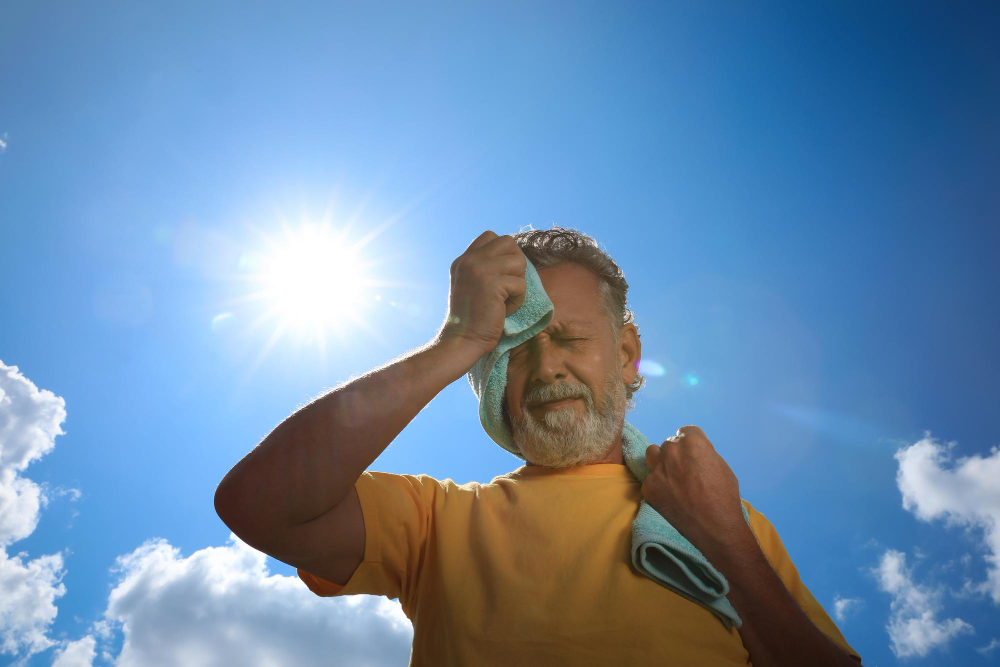
You spent a few hours outside. Maybe it was a construction shift, a Little League game, a run through the park, or a weekend barbecue. Now you have a pounding headache, you're dizzy, exhausted, and something feels off.
The question many people ask at that point is simple: "Am I dehydrated, or is this something more serious?"
Heat stroke is one of the most dangerous heat-related illnesses we see during New York summers. It develops when the body can no longer cool itself properly and internal temperature rises to unsafe levels. Left untreated, it can quickly become a medical emergency. At NYUCC, patients regularly visit our walk in clinic in New Hyde Park after spending time outdoors in extreme heat, often unsure whether their symptoms are serious enough to seek medical care.
Why heat stroke catches people off guard
Most people assume heat stroke only happens during extreme situations.
A marathon runner collapsing at the finish line. A construction worker spending an entire day on a roof. An athlete pushing through a practice in 95-degree weather.
Those situations certainly increase the risk.
But heat stroke can also affect people doing ordinary things on ordinary summer days.
We've seen patients who spent a few hours gardening. Others were attending outdoor events. Some were simply running errands during a heat wave.
The combination of heat, humidity, physical activity, dehydration, and underlying health conditions can overwhelm the body's cooling system faster than many people realize.
The symptoms people often dismiss at first
Heat stroke rarely announces itself dramatically from the start.
It usually begins with symptoms that are easy to brush aside.
People tell themselves:
- "I'm probably just tired."
- "I haven't had enough water today."
- "I just need to sit down for a few minutes."
Sometimes that's true.
Sometimes it isn't.
Symptoms that deserve attention include:
- Severe headache
- Dizziness
- Nausea
- Vomiting
- Weakness
- Muscle cramps
- Rapid heartbeat
- Unusual fatigue
- Difficulty concentrating
- Feeling confused or disoriented
As symptoms become more severe, people may struggle to think clearly, have trouble speaking, lose consciousness, or experience seizures.
That is no longer simple dehydration.
One symptom matters more than all the others
If heat exposure is followed by confusion, disorientation, unusual behavior, or loss of consciousness, medical evaluation should not wait.
Those symptoms suggest the heat may be affecting the brain.
Family members are often the first to notice it.
A person may seem unusually irritable. They might repeat themselves. They may struggle to answer basic questions or appear confused about where they are.
These changes can happen surprisingly quickly.
Heat exhaustion vs heat stroke
This is one of the most common questions patients ask.
Heat exhaustion is the body's warning signal.
Heat stroke is what happens when that warning signal is ignored or when the body simply can't keep up.
Someone with heat exhaustion may feel weak, sweaty, dizzy, and dehydrated. Many people improve after moving indoors, resting, and drinking fluids.
Heat stroke is different.
The body loses control of its internal temperature. Symptoms become more severe, and the risk of complications rises significantly.
The line between the two is not always obvious, which is one reason many patients seek evaluation at urgent care.
Who is most vulnerable during New York summers?
Heat doesn't affect everyone equally.
Certain groups consistently face higher risks.
Outdoor workers
Roofers, landscapers, construction crews, utility workers, delivery drivers, and road crews spend hours exposed to direct sunlight and high temperatures.
Older adults
As we age, the body becomes less efficient at regulating temperature and conserving fluids.
Young children
Children can become overheated much faster than adults and may not recognize the warning signs.
Athletes
Practices, games, and outdoor workouts place additional stress on the body, especially during humid weather.
People with chronic medical conditions
Heart disease, diabetes, obesity, and certain medications can make heat-related illness more likely.
Every summer, patients seeking urgent care in Queens Village NY arrive with symptoms that started after work, exercise, sporting events, community gatherings, and other outdoor activities.
What should you do if you suspect heat stroke?
The first step is simple.
Get out of the heat.
Move into an air-conditioned building, shaded area, or cooler environment as quickly as possible.
Then begin cooling the body:
- Remove excess clothing
- Apply cool water to the skin
- Use fans if available
- Place cold packs around the neck and underarms
- Sip water if the person is alert and able to drink safely
What you should not do is wait several hours hoping symptoms will disappear.
When symptoms continue to worsen, the safest decision is to seek medical attention.
When urgent care makes sense
Many people struggle with the same question:
"Should I go to urgent care, or should I just rest at home?"
If symptoms are mild and improving, rest and hydration may be enough.
If symptoms persist, worsen, or simply don't feel right, an evaluation can help determine what's actually going on.
Urgent care is often appropriate for:
- Ongoing dizziness
- Persistent headaches
- Significant dehydration
- Repeated vomiting
- Muscle cramps that won't stop
- Extreme fatigue
- Symptoms that return after temporary improvement
Patients looking for urgent care near Floral Park frequently visit after spending long periods outdoors and finding that hydration alone isn't solving the problem.
Why dehydration isn't always the whole story
Many people assume every heat-related illness is simply dehydration.
That isn't always the case.
Two people can spend the same amount of time outside.
One feels fine after drinking water.
The other develops headaches, dizziness, weakness, and confusion.
Heat-related illness involves more than fluid loss. The body is managing temperature, blood flow, electrolyte balance, physical exertion, medications, and existing health conditions all at the same time.
That's why symptoms can vary so widely from person to person.
Protecting yourself during a New York heat wave
Most cases of heat-related illness can be prevented.
The challenge is that people often wait until they feel thirsty, exhausted, or overheated before taking action.
By then, they're already behind.
A few practical habits make a difference:
- Drink fluids throughout the day rather than all at once
- Schedule strenuous activity earlier in the morning when possible
- Take regular breaks from direct sunlight
- Wear lightweight clothing
- Avoid excessive alcohol during extreme heat
- Check on elderly relatives and neighbors during heat waves
Simple steps. But they matter.
Don't ignore symptoms that feel different
Most people know what ordinary fatigue feels like.
Most people know what a hot day feels like.
Heat stroke is different.
People often describe a sense that something isn't right. They feel unusually weak, unusually dizzy, or unable to think clearly. Sometimes those instincts are worth listening to.
At NYUCC, we evaluate patients throughout New Hyde Park, Queens Village, Floral Park, Garden City, and surrounding communities for heat-related illnesses during the summer months. Whether you're dealing with dehydration, heat exhaustion, or symptoms that seem more serious, our team can help determine the cause and guide the next steps.
If you're searching for a walk in clinic in New Hyde Park, urgent care in Queens Village NY, urgent care near Floral Park, or urgent care in Garden City NY, prompt evaluation can help prevent a manageable condition from becoming a much bigger problem.
Go to NYUCC for minor medical emergencies, and call 911 for life-threatening situations
Frequently asked questions
How quickly can heat stroke develop?
It can happen within a few hours during extreme heat, especially when physical activity and dehydration are involved.
Can I get heat stroke even if I'm drinking water?
Yes. Hydration helps, but humidity, medical conditions, medications, and prolonged heat exposure can still overwhelm the body's cooling system.
Is heat stroke always an emergency?
Heat stroke itself is considered a medical emergency. Early symptoms should never be ignored.
What is the difference between heat exhaustion and heat stroke?
Heat exhaustion typically causes fatigue, sweating, and dizziness. Heat stroke can involve confusion, altered mental status, and dangerously high body temperature.
Should I visit urgent care for heat-related symptoms?
If symptoms are persistent, worsening, or interfering with normal activities, medical evaluation is recommended.
Who is most at risk during a heat wave?
Outdoor workers, older adults, children, athletes, and people with chronic medical conditions face higher risks.
Can heat-related illness get worse after I go indoors?
Yes. Symptoms sometimes continue to progress even after heat exposure has ended, which is why ongoing symptoms shouldn't be ignored.
